
Some Will Say Websites Are Dead. Don't Be Fooled. Websites Are More Important Than Ever.

Some will say websites are dead, because a customer can ask ChatGPT or stay inside a social app. Don't be fooled. Websites are more important than ever. A radio ad, a truck wrap, a trade-show booth, and a personal connection still send that potential customer to a website address, and that page is the only place the owner fully controls.
Article Summary
- A platform is an ecosystem you do not own. Meta, Google, Yelp, Shopify, Etsy, Amazon, and eBay keep the viewers, the ads, or the store.
- Trade shows, business cards, radio, television, and a drive-by still point at a domain. Search is one channel.
- The page the customer lands on stays yours when a platform changes its rules. You can edit it on an ordinary afternoon.
- Hours and prices that live only on Google, Yelp, or Amazon can disappear with the listing. The page you own is the one you correct first.
- Google Maps, Apple Maps, and Yelp have to verify a real business. The domain is the record they check.
A platform is an ecosystem you do not own
A platform is the system a company runs so it can keep the audience and the money. Facebook and Instagram are one platform. The viewers, the ads, and the marketplace all sit inside Meta, so a business that lives only there rents every step from the first view to the sale.
Google runs the same kind of system. Search listings and Maps have to draw eyeballs, because those eyeballs are where Google shows ads. Yelp does this too. The reviews, the photos, and the bookings stay on Yelp so Yelp can sell the attention around them.
Some platforms sell ads. Some sell access, a membership or a store account the business pays to keep. Shopify, Etsy, Amazon, and eBay sell the store, and they also sell the viewers and the ads around that store. The audience, the listing, and the checkout can all live in an ecosystem the business does not own.
Use a platform when it introduces a stranger. Keep the hours, the price, and the way to buy on a page you can change when that ecosystem changes the rules.
It was never only Google
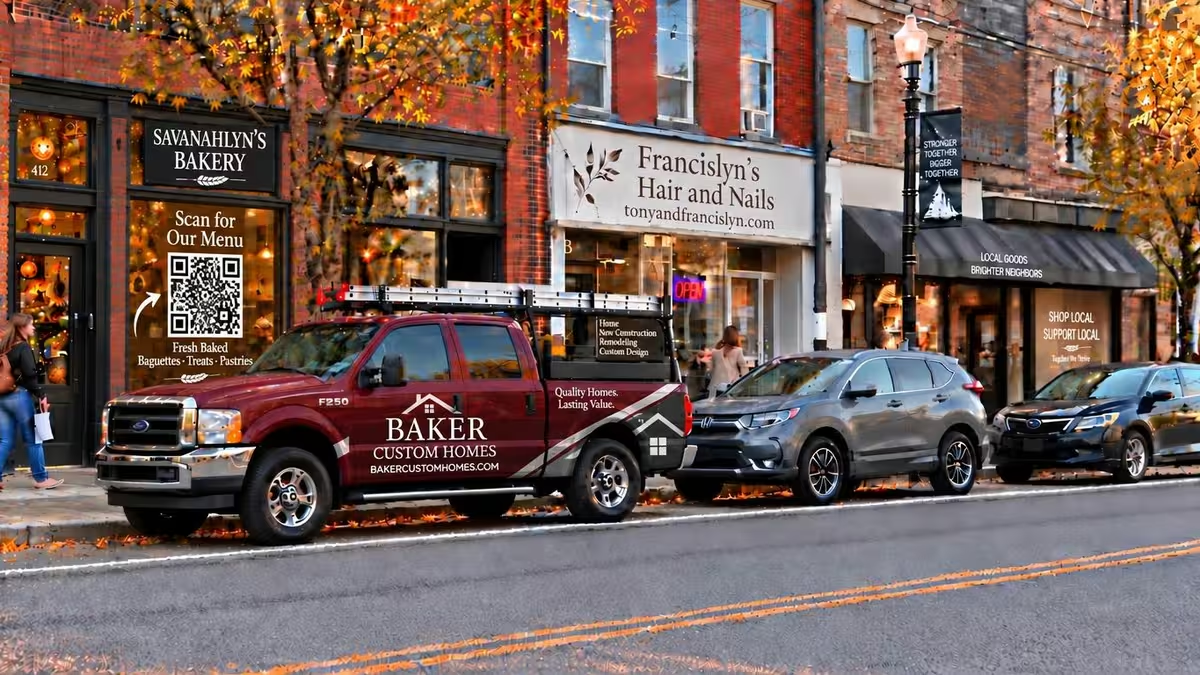
The people who say a website no longer matters are usually describing search. They have not worked a trade-show aisle, or handed a card across a table at a roundup or a local meeting. They have not put a domain on a yard sign, a door hanger, or the side of a truck.
Radio still reads a domain out loud. Television still holds one on the screen. A Spotify ad and a spot inside a TV app do the same. The name and the code are on the creative now, because the person who heard you still has to land somewhere you control.
That page is the same job for an attorney, a bakery, an HVAC company, a roofer, a home-services contractor, a shop that lives on foot traffic, and a company that sells to other companies.
Some of them barely touch social. Some of them get the next customer from a drive-by or a walk-by, not from a query. A market stall is one version of the same moment, beside the booth, the meeting, and the truck.
A domain name is the address. A QR code is what you print on the thing the person already has in hand: a card, a booth banner, a menu, a receipt, an invoice, a packing slip. Point it at a rented shop and the last step belongs to someone else. Point it at your domain and they can check the facts, book, or buy on a page you edit.
Meta, Amazon, and Google still earn their place when you want a stranger. They charge for the introduction, and they keep the customer if the only next step lives inside their platform. The person at the booth, the counter, or the curb is already there.
PRO TIP Point every code, every spoken domain, and every card at a page that can take the next step. A logo and a phone number waste the moment the ad, the booth, or the sidewalk already earned.
The page stays yours
A platform can change its fees, its rules, and its name. The page the customer lands on can stay yours. You can edit it on an ordinary afternoon without opening a support ticket.
The moment passes, and the person still needs a place to check the price, the towns, the proof, and how to buy. That place is the website. It is the foundation under the marketing that never mentions a browser, and under the marketing that does.
The people who announce that websites are finished are usually selling the next platform. The headline buys clicks, attention, and a signup that keeps the customer inside an ecosystem you do not own. A site that never runs the 4 ACES, and only shows a logo and a phone number, is a brochure again.
You Already Have a Website. You Need a Growth Engine shows how Attract, Capture, Educate, and Sell run in the same month. They Say Your Website Is Done answers the weekly claim that the website no longer matters, and it lists what those pages should contain.
Rent it, borrow it, or hope
The record is the hours, the prices, the photos, the reviews, and the proof. Rent that record, and a Google Business Profile, a marketplace, a franchise portal, or a vendor upload speaks for you. You pay in fees, in ads, or in attention, and a policy change can take the listing down overnight.
Borrow the record, and a model, a national brand page, or a competitor's clearer page describes the business. That description gets treated as the truth. Asking ChatGPT what your own company does, and then publishing the answer, is borrowing. So is letting a franchisor's national page be the only description of the local shop.
Hope the platform stays up, and a suspension, a renamed field, a retired feature, a startup that closes, or an agency that holds the only login takes the record with it. A shop that lived inside that platform spends the week with no public hours. A complete domain keeps the facts in public while the listing gets sorted.
Own the record, and you can edit it without opening a ticket. You can move it if the tool dies. It still answers when the rented platform is down. When the copies disagree, this is the one you correct first.
A source of truth is the record that wins when those copies disagree. A knowledgebase is what the record contains: one service to a URL, a range, the towns you drive, and proof of a job like the one in front of the buyer.
The platforms have to believe you
Google Maps, Apple Maps, and Yelp are copies, and the copies have to be convinced. Google's own policy disables a profile when Google decides the business does not exist at the place you claim. The name on the profile is supposed to match the name on the door, the website, and the other materials a customer would see.
Apple Maps and Yelp ask the same kind of question. A listing that cannot be matched to a real business gets treated as spam.
That is why a source of truth matters when the customer asks ChatGPT. Every platform you submit to, a Google Business Profile, a directory, a marketplace, a chat upload, has to be checked against something. If that something is another rented profile, the platforms argue with each other. If it is a domain you edit, you have a place to point when a reviewer, a model, or a customer asks who you actually are.
PRO TIP When a price, a town, or a policy changes, change the domain the same day. Then bring the profile and the directories back in line with it.
The platforms are reaching for the answer
Google still sells the visit. A smaller share of searches now leave the results page for an open website, and the ad that rides on that click feels the loss. The count, and what to do with the visit you still get, is in The Old Playbook Is Broken.
OpenAI is licensing what those platforms already hold. On July 23, 2026, Yelp told Axios it is licensing reviews, photos, and business facts to ChatGPT. On August 10, 2026, Yelp turned on reservations and a waitlist inside the chat, so a table can be booked through Yelp without a new tab.
If Yelp's copy of the hours is wrong, the answer can inherit the error. You correct the domain, then you correct the listing.
Microsoft is offering the layer underneath. In its June 2, 2026 account of Web IQ, the same infrastructure that powers Copilot also powers ChatGPT. The lab wants a fresh web on a meter. Your pages are part of what that meter can read, which is a reason to own the pages and keep them current.
MapQuest is the quiet version of the same scramble. Set brand-owned domains aside, and Yext's first-quarter 2026 count of location-grounded answers put MapQuest first among third-party domains, with 5.8 citations for every one Wikipedia earned. An old directory can out-speak a thin site. Matching the smaller directories to the domain is the job in Citations Aren't for the Map Pack Anymore.
A model a business can run on its own machines already answers most of the ordinary questions a shop gets asked, and those models are getting better. That is an operator's read, not a lab score. The frontier companies are competing to own the platform the customer asks. The freedom is keeping your own record while you also use theirs.
Same move at three sizes
A storefront, a warehouse, and a headquarters face different platforms. The move is the same.
Rent the platform when it sends work you would not have met. Correct the page you own first when the copies disagree. If the platform suspends the listing, or the vendor shuts the door, the page you own still answers.
| Size | The platform that wants the record | The foundation you keep |
|---|---|---|
| SizeLocal | The platform that wants the recordGoogle, Yelp, Apple, Facebook, and the voice assistant on the phone | The foundation you keepHours, services, towns, proof, and the page a spot, a sign, a card, or a truck points to |
| SizeEcommerce | The platform that wants the recordThe marketplace, the shopping graph, and the app that holds the customer | The foundation you keepThe offer, the policy, the proof, and the list. The card in the box points the second order home. |
| SizeEnterprise | The platform that wants the recordA vendor knowledge tool, a bot in someone else's account, an agency login | The foundation you keepA public story agents can read, and a file you can export if the contract ends |
A bakery prints the domain on the bag. A contractor puts it on the truck and the invoice. An attorney puts it on the card handed across the table. An online brand puts the reorder URL on the insert, so the first order can come from a platform and the second one comes home.
An enterprise team treats the vendor's knowledge tool as a platform. Customers and agents still need one public story on a domain the company can edit without a ticket. Export that story. A login you cannot leave is a record the company rents.
Reach out from what you own
Owning the foundation is how you use more than one platform and still leave with the record. You still want the map pack, the marketplace stranger, the publicity hit, and a line that books the call you missed. Publicity that cannot point to a page is a moment. Publicity that lands on the domain is an asset the next campaign can use.
Missed-call booking on the phone line is Capture, and that work lives at xealai.com. Strategy, the site, and the foundation stay here. Editing the record on a trigger, with a named owner, is the argument in Fire the Retainer Report. A chart of last month's traffic is a different document from a site that changed because a price changed.
What to do this week
Write down the path a real customer already walks. Then make the domain the place that path can finish.
- List every place a customer can buy or book that is not your domain: a profile, a marketplace, a social shop, a vendor portal.
- Put a short domain or a QR code on the thing they already hold. Card, booth banner, truck door, yard sign, receipt, menu, invoice, packing slip.
- Make that URL able to finish. Price or range, ship-to or booking, proof, and a next step a person can complete on a phone.
- Move any fact that lives only in Google, Yelp, Amazon, or someone's head onto the site in the same week.
- Ask what still answers if that login is suspended tomorrow. If the answer is nothing, the business has no page it controls.
Putting it together
Websites are more important than ever because every channel still has to land. A booth, a television spot, a radio read, a drive-by, and a chat answer all need a record that survives the platform. Own that record, and let the platforms change their rules.
Reach into Meta, Amazon, Google, Yelp, and whoever licenses the next copy. Take the stranger they send. Bring the facts, the list, and the second order back to a domain you can edit on an ordinary afternoon.
What those pages should contain is already written in They Say Your Website Is Done. The job in front of you is keeping that record on a domain you own.
At Xeal we map that foundation to the month of work. The pages, the speed, the publicity that points home, and the edits when a fact changes.
Strategy decides which platform is speaking for you. Search engine optimization, answer engine optimization, and generative engine optimization (SEO, AEO, and GEO) is the Attract work that makes the record quotable. Fast pages are how the person who just heard the domain, and the agent that reads later, both finish.
Talk with Xeal about the website you own
Bring the code, the listing, and the place the facts actually live. We will show you which platform is speaking for you, and what the domain still has to hold.
FAQ
Is my website dying because customers use AI and social?
The website is where those channels land. A television spot, a radio read, a marketplace listing, and a ChatGPT answer still need a domain where the offer, the proof, and the next step live. A platform can change the rules, and it can close a store, a profile, or a marketplace inside its own ecosystem. A domain you control is where a customer can buy, book, or check a fact when that platform is down. They Say Your Website Is Done lists what belongs on the pages, one service to a URL. The website is the place those pages live.
Do I still need Google, Meta, or Amazon?
Use them when they send a stranger you have not met. A booth, a counter, a truck at the curb, and a walk past the door are a different moment. That person is already there. A QR code or a short domain takes them to a page you own, where they can check the facts, book, or buy. Rent the platform for reach. Keep the record on the domain, and correct the domain first when a copy is wrong. Those platforms also have to believe you are a real business. A profile they cannot match to your domain gets treated as spam.
What is a source of truth for a business?
A source of truth is the record that wins when the copies disagree. For most companies that record is the site you can edit, export, and still show on an ordinary afternoon. Profiles, directories, vendor catalogs, and chat uploads are copies. You correct the site first, then you bring the copies back in line. A knowledgebase is what that record contains: services, areas, prices, policies, and proof. Renting the only copy means a suspension or a shutdown can silence you for a week.
What if my only complete listing is on Google or Yelp?
Keep the listing healthy, and put the full story on the domain in the same week. Yelp is licensing reviews, photos, and business facts to OpenAI, and a customer can book a Yelp table inside ChatGPT. A thin or wrong listing can become the chat answer. Hours, services, and a pricing range belong on a page you control, with the profile matched to it. A suspension, a review pile-on, or a renamed field should not be the week you disappear. The site is what still answers while the platform is sorted.
Does a QR code replace a website?
A QR code opens a page. The domain it opens is the foundation. The code can open your site, a rented shop, a social page, or a link tool someone else can change. Point it at a page that states the offer, takes the next step, and agrees with the name on the card and the truck. A code that lands on a logo and a phone number wastes the moment the booth, the ad, or the sidewalk already earned. A short domain spoken on the radio, or printed in type, does the same job when the camera stays in a pocket.
How is the website different from a growth engine?
The website is the foundation every channel falls back to, online and off. A growth engine is the loop that uses that foundation to Attract, Capture, Educate, and Sell in the same month. I named that loop the 4 ACES in 2006. You Already Have a Website. You Need a Growth Engine shows how to run that loop. A site that only shows a logo and a phone number is a brochure. Facts with nobody answering are a library. The engine is the library plus the response. The website is where that loop stands.
What should a local seller do this week?
Put the domain on the thing the customer already has: the card, the truck door, the yard sign, the menu, or the invoice. Make that URL able to book or buy, with a price and proof a person can trust on a phone. Write down every fact that lives only in a profile, a marketplace, or someone's head, and put it on the site the same week. Then ask ChatGPT who you are and what you charge. If the answer is wrong, correct the site first, then the copies. Check the same question again next month.
What about a vendor knowledge base at enterprise size?
Treat the vendor tool as a platform you reach into, and keep your own record beside it. The story customers and agents read should live where the company can edit it without a ticket and export it if the contract ends. A custom bot inside someone else's account, an agency-only login, and a catalog you cannot download are records you rent. Keep the public pages current, match the listings to them, and keep a file you can leave with. The vendor can distribute. The foundation stays yours when the subscription stops.
Sources
- Axios: Yelp licenses reviews, photos, and business facts to OpenAI (July 23, 2026)
- Yelp: reservations and waitlist inside ChatGPT (August 10, 2026)
- Microsoft Command Line: Web IQ grounding, the layer behind Copilot and ChatGPT (June 2, 2026)
- Yext Research: MapQuest led third-party citations on location-grounded answers, Q1 2026
- Google Business Profile policies: a profile is disabled when Google decides the business does not exist at the claimed location
- Xeal: They Say Your Website Is Done. We Say It's More Important Than Ever.
- Xeal: You Already Have a Website. You Need a Growth Engine.
- Xeal: The Old Playbook Is Broken
- Xeal: Citations Aren't for the Map Pack Anymore
- Xeal: Fire the Retainer Report
What operators say after working with Xeal
Quotes from people who hired Tony and Xeal for websites, SEO, publicity, and strategy.
Tony is truly a visionary. He's always coming up with new ideas for his company and his clients. As an entrepreneur, Tony is excellent at business consultation and speaking on the radio.
Tony has loads of experience when it comes to internet marketing. He has tested what does and doesn't work and is always up to date on the latest techniques that are working online. A true veteran in the industry.
Want help putting this into production?
If this article named a problem you already feel, tell me what is stuck. We will turn the playbook into systems your team can run.